Case Studies - Business Environment
28 September 2025
Background
A leading automotive company, in partnership with 4Sight, embarked on a digital transformation journey to enhance its business operations. This initiative aimed to digitise and optimise workflows, leveraging the Microsoft 365 Productivity suite. The project evolved into the creation of the Digital Workplace (DWP), aligning with the company’s core objectives.
The Challenge
Before 4Sight’s intervention, the company faced challenges, such as low adoption of digital tools, inefficient collaboration, and a lack of mobility. They aimed to overcome obstacles and achieve goals such as enhancing productivity, collaboration, and mobility. Key requirements included promoting the use of Microsoft productivity solutions, identifying usage patterns and supporting change management activities.
DAKAR-Themed Approach
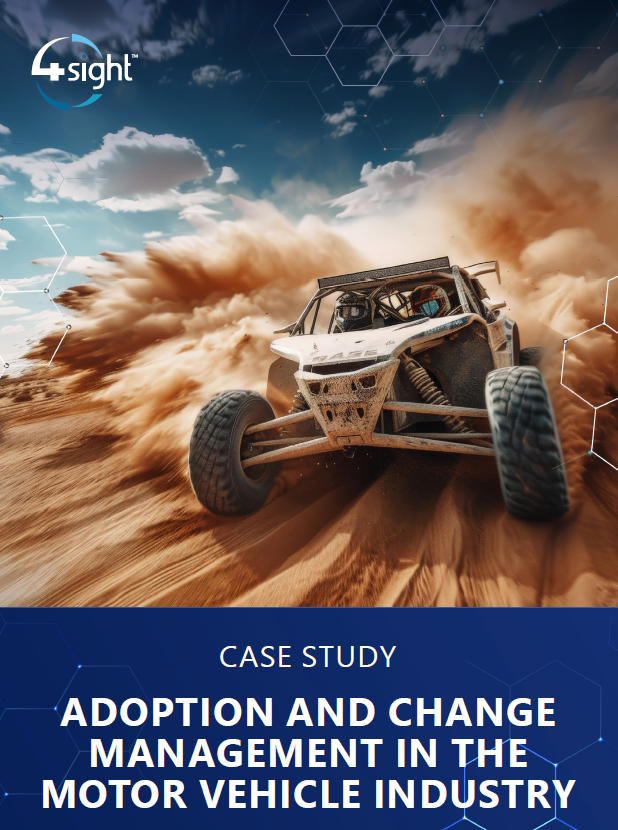
The journey began with a DAKAR-themed approach, aligning with the company’s business objectives and core values. This theme created an engaging framework for the journey of digital transformation, inspiring excitement and participation among employees.
Change Readiness Assessments and Leadership Sessions
Change readiness assessments were conducted to gauge the organisation’s preparedness for the digital transformation journey. These assessments helped identify potential barriers to adoption and areas requiring special attention. Leadership sessions were held to align key stakeholders with the objectives of the project and secure their commitment to driving change within the organisation.
Change Champions
Change champions were identified and onboarded to help drive the goals of the digital transformation journey within the organisation. These individuals played a crucial role in advocating for change, providing support to their peers, and fostering a culture of continuous improvement.
Gamified Training Approach
Inspired by the Dakar Rally, 4Sight developed a gamified training approach designed to make learning fun and engaging for employees. The training was divided into stages, each representing a different module or topic from the Microsoft 365 Productivity suite.
Interactive stalls were set up for each Microsoft stack, including Teams, Outlook, SharePoint, OneDrive, and OneNote. These stalls featured engaging activities such as videos, interactive demonstrations, and gamification challenges aimed at encouraging active participation and knowledge retention.
Executive Training and End-User Training
Executive training sessions were conducted to equip key leaders within the organisation with the skills and knowledge necessary to drive collaboration, productivity, and mobility using Microsoft tools. These sessions included facilitated, one-on-one coaching sessions tailored to the specific needs of each executive.
End-user training was also provided to ensure that all employees were proficient in using the Microsoft 365 Productivity suite. This training encompassed a variety of formats, including microlearning modules, practical workshops, and gamification challenges, aimed at catering to different learning styles and preferences.
Solution
Ongoing Monitoring and Optimisation
The 4MIA Digital Transformation Advisor provided ongoing visibility into adoption and usage trends, enabling continuous monitoring and optimisation of the digital workplace environment.
Insights generated by 4MIA were used to track the effectiveness of change management activities and identify areas for further improvement, ensuring that the organisation continued to derive maximum value from its investment in Microsoft technologies.
Benefits and Outcomes
The implementation yielded several benefits for the customer. Firstly, it fostered a cultural shift towards embracing digital transformation, leading to increased productivity and enhanced collaboration. Resistance to change was effectively managed through targeted initiatives. The gamification strategy encouraged optimal usage of Microsoft tools, improving user adoption and satisfaction. Ultimately, the customer achieved improved efficiency, mobility, and communication across the organisation, aligning with their goal of leveraging technology for a competitive edge.